Search This Blog

Showing posts with label Tamiflu. Show all posts

6.24.2013

Do We Have Any Evidence That Tamiflu Works?

The threat of Pandemic Influenza remains on the horizon with the latest evidence showing that H7N9 kills a little over one third of all infected. That's more lethal than the 2009 swine flu

While H7N9 has stalled for the moment, if it or a new variant arises, are we prepared to fight it?

Risk factors are all in place that make it likely we'll see a virulent flu variant in the near future. 

Moreover, as the MERS news coming out of Saudi Arabia ... or not coming out for that matter ... reminds us, other types of pandemics are brewing and are waiting to be spread. 

Thus, it's always good to be restocking our tool chest, and sharpening our knives to make sure we are vigilant and ready when the next one comes. The trouble is, we don't have a lot of tools. (See my earlier post: Poor Tools for Fighting Flu)

Tamiflu is the drug of choice for high risk folks presenting with influenza and some are even proscribing it as prophylaxis for flu exposure. There have been lot of studies as to whether it is actually effective - the most rigorous controlled study showing that it reduces the duration of the disease, but not the severity. 

Actually, one study found that the duration of the disease symptoms is reduced on average of 20 hours. Moreover, in most otherwise healthy patient populations, using the drug caused little reduction in hospitalization or complications when compared with placebo in several studies.

In other countries, there has been more debate about whether to give a drug that hasn't been shown to be all that effective. That debate has been fueled by the fact that the drug company won't release the results of all of its studies. 

This is a brewing into a big fight in the UK because that country has stockpiled more than $800 million worth of Tamiflu. 

Last week the editor of the British Medical Journal told a parelamentary committee that there is little evidence that Tamiflu is better than cheap painkillers. Tamiflu's maker, the Swiss company Roche, has promised to release the results of its own clinical trials, but has so far failed to do so. 

Bad Pharma author, Ben Goldacare in the same committee hearing told the ministers that this is part of a larger problem with pharma studies -- not all the results have to be released. Thus drugs companies tend to release only the clinical trial that support the effectiveness of their new drug, while keeping negative results hidden away. 

This isn't illegal or even a new problem. 

"Tamiflu is just one small microcosm," Goldacre told the ministers. "One of the things that is very striking is at no stage the Roche break the law, because the law is broken." 

Roche has released only about 40 percent of the 137 clinical trials it conducted. Other drug companies have had similar issues and in recent years there have been recalls of drugs in the United States where early trials pointed to negative outcomes.

So what is the latest on whether Tamiflu is worth the money - or the risk of side effects?

New Scientist reported a round up of the debate pointing to a study of the 2009 H1N5 outbreak. In that case, Tamiflu - given early - reduced the death rate for hospitalized patients by nearly half. A meta-analysis looking at more than 160,000 patients in 37 countries was published in February showing that the drug is effective and saves lives. 

Meanwhile, the Centers for Disease Control addressed those underwhelming earlier findings that showed the drug only reduced the duration of the disease by only 21 hours. 

The CDC pointed out the Cochrane Collaboration research did not look at the high risk populations that need the drug, but rather tested it on seasonal flu cases in otherwise healthy populations.  Tamiflu seems to help prevent the development of pneumonia, which is the killer when it comes to Pandemic Flu in high risk populations.

In other words, we should be giving Tamiflu to high risk populations with pandemic flu to prevent lethal pneumonias, not handing it out to healthy populations because they demand it when you give them a diagnosis of seasonal flu. 

1.15.2013

Poor Tools Available For Fighting Seasonal Flu

Image Credit: Tamiflu
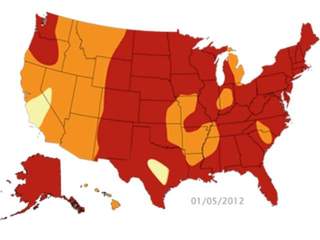
Influenza this year has reached epidemic proportions - now widespread in almost all 50 states and overwhelming hospital resources on the East Coast. 

Over at National Geographic, Carl Zimmer points out that, while the flu comes back and kills half a million people a year, it is pretty incompetent as far as epidemics go - unfortunately, our tools to respond are worse.
The fact that this year’s seasonal flu has overwhelmed us (shutting down some hospitals, in fact) doesn’t bode well for the inevitable moment some time in the future when we do come face to face with a much meaner flu strain.
The trouble lies not just in our creaky hospital system, but in the weapons we have on hand. There’s a flu vaccine, thank goodness, but it’s only about62% effective. Making matters worse, well under half of Americans get vaccinated each year. If you get sick, doctors don’t have a lot of options for treatments. 
Indeed, the other night I asked a provider if she wanted a flu swab. "Why," she said. "It doesn't change how we are going to treat it."

There are of course antiviral drugs on the market. Tamiflu being the most available drug. It is given out quite readily to anyone who demands it from their doctor and is even being used as prophylaxis after influenza exposure. 

How effective is Tamiflu? The joke around the hospital is that if you get the flu, it will be gone in two weeks. IF you take Tamiflu, it will be gone in 14 days. Actually, one study found that the duration of the disease symptoms is reduced on average of 20 hours. Moreover, in most otherwise healthy patient populations, using the drug caused little reduction in hospitalization or complications when compared with placebo in several studies.

So what's the harm? Well, there are side effects and adverse events that have been reported. Just about every drug -- including placebo if you coach for it -- has listed side effects of nausea, vomiting and abdominal pain. However, it is not often that you see this warning on a label:
Neuropsychiatric events: Patients with influenza, including those receiving
TAMIFLU, particularly pediatric patients, may be at an increased risk of
confusion or abnormal behavior early in their illness. Monitor for signs of
abnormal behavior. (5.2)
What kinds of confusion or abnormal behavior? Japanese cases involving abnormal behavior including a handful of deaths in pediatric patients lead regulators there to institute restrictions on prescribing the drug to those between the ages of 10 and 19 starting in 2007. 

Neurological and psychological disorders were listed as possible side effects including impaired consciousness, abnormal behavior and hallucinations. Convulsions,  seizure like activity and neurological symptoms such  delirium, hallucinations, confusion, abnormal behavior, convulsions, and encephalitis. have been reported as well, but infrequently given the widespread use of the drug.

So do we have underreporting of adverse events due to all the other factors involved in a patient suffering from a viral illness, or are these neurological side effects just so rare that it is hard to establish a causal relationship.

Still, a busy flu season has renewed the hype and demand for the only drug out there indicated for seasonal flu. Moreover, the company that makes it still refuses to release full data from the trials - which is suspicious.

Further reading: (See: The Myth of Tamiflu: Five Things You Should Know ) and the British Medical Journal's Open Data Campaign. 

If You Want to Make God Laugh...

 Early on in the pandemic one of my daughters exclaimed "Covid ruins everything!"  It became a running joke in our house, a bitter...