Search This Blog

Showing posts with label epidemic. Show all posts

1.15.2013

Poor Tools Available For Fighting Seasonal Flu

Image Credit: Tamiflu
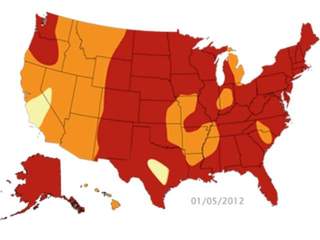
Influenza this year has reached epidemic proportions - now widespread in almost all 50 states and overwhelming hospital resources on the East Coast. 

Over at National Geographic, Carl Zimmer points out that, while the flu comes back and kills half a million people a year, it is pretty incompetent as far as epidemics go - unfortunately, our tools to respond are worse.
The fact that this year’s seasonal flu has overwhelmed us (shutting down some hospitals, in fact) doesn’t bode well for the inevitable moment some time in the future when we do come face to face with a much meaner flu strain.
The trouble lies not just in our creaky hospital system, but in the weapons we have on hand. There’s a flu vaccine, thank goodness, but it’s only about62% effective. Making matters worse, well under half of Americans get vaccinated each year. If you get sick, doctors don’t have a lot of options for treatments. 
Indeed, the other night I asked a provider if she wanted a flu swab. "Why," she said. "It doesn't change how we are going to treat it."

There are of course antiviral drugs on the market. Tamiflu being the most available drug. It is given out quite readily to anyone who demands it from their doctor and is even being used as prophylaxis after influenza exposure. 

How effective is Tamiflu? The joke around the hospital is that if you get the flu, it will be gone in two weeks. IF you take Tamiflu, it will be gone in 14 days. Actually, one study found that the duration of the disease symptoms is reduced on average of 20 hours. Moreover, in most otherwise healthy patient populations, using the drug caused little reduction in hospitalization or complications when compared with placebo in several studies.

So what's the harm? Well, there are side effects and adverse events that have been reported. Just about every drug -- including placebo if you coach for it -- has listed side effects of nausea, vomiting and abdominal pain. However, it is not often that you see this warning on a label:
Neuropsychiatric events: Patients with influenza, including those receiving
TAMIFLU, particularly pediatric patients, may be at an increased risk of
confusion or abnormal behavior early in their illness. Monitor for signs of
abnormal behavior. (5.2)
What kinds of confusion or abnormal behavior? Japanese cases involving abnormal behavior including a handful of deaths in pediatric patients lead regulators there to institute restrictions on prescribing the drug to those between the ages of 10 and 19 starting in 2007. 

Neurological and psychological disorders were listed as possible side effects including impaired consciousness, abnormal behavior and hallucinations. Convulsions,  seizure like activity and neurological symptoms such  delirium, hallucinations, confusion, abnormal behavior, convulsions, and encephalitis. have been reported as well, but infrequently given the widespread use of the drug.

So do we have underreporting of adverse events due to all the other factors involved in a patient suffering from a viral illness, or are these neurological side effects just so rare that it is hard to establish a causal relationship.

Still, a busy flu season has renewed the hype and demand for the only drug out there indicated for seasonal flu. Moreover, the company that makes it still refuses to release full data from the trials - which is suspicious.

Further reading: (See: The Myth of Tamiflu: Five Things You Should Know ) and the British Medical Journal's Open Data Campaign. 

11.24.2012

Best Medical History Books


Chatting with family over the holiday always leads to the discussion of books -- at least on my part anyway. I'm always illuminating every conversation with something I've read about the history of medicine. Makes my job changing bedpans sound a lot more interesting. After all, I can't very well discuss the "what had to be removed from where" stories over turkey and stuffing.

So here is a list of books I've been recommending to the medically curious book lovers. You don't need a medical background to read and enjoy these books, just a curiosity and love of history and science.

The Emperor of All Maladies: A biography is how it is billed, but it really a history of how we treat the diseases of cancer in all their forms. Unflinching in identifying our well-intentioned mistakes and missteps, this book is enlightening, horrifying, hope-filled and magnificent. It won the Pulitzer Prize for a reason -- it is flawlessly written and masterfully researched. Probably the book I recommend above all others.

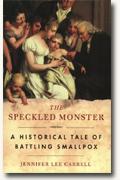
The Speckled Monster : I love reading history about people you've never heard of who changed the course of the world. In this book, Jennifer Lee Carrell creates a pulse pounding thriller on both sides of the Atlantic as medical rebels with little to go on, experiment with smallpox innoculation long before Edward Jenner noticed cow pox on the hands of milkmaids. How did Lady Mary Wortley Montagu in England and Zabdiel Boylston in colonial Boston change western history? What role did Cotton Mather and a teen-age Ben Franklin play? You have to read this amazing book to find out!

The Great Influenza There are lots of books on the Influenza pandemic -- and I've read most of them -- but John Barry's is by far the best. Not just for it's exhaustive research into the history and origins of the disease. No, Barry uses the pandemic as a focal point for the history of modern medicine, public health and medical research. Brilliant work, brilliant writing, incredibly thought provoking.

The Ghost Map: John Snow created the science of epidemiology -- and he did it by walking into a nightmare of a cholera epidemic in 1850's London. A fantastic book about one of the forgotten names of science. The author Steven Johnson also wrote "The Invention of Air" which is another of my favorite recent medico-historical books.

Germs: Biological Weapons and America's Secret War. I like this books for a lot of reasons, but mostly because it opens with the bioterror attacks of the Rajneeshee cult on the city of The Dalles in 1984. I was a 15 year old working at my mom's restaurant in The Dalles in 1984 and had a front row seat for this first documented attack of modern bioterrorism on US soil.

Stiff: Mary Roach looks into what happens to dead bodies after they are dead. Turns out there's a lot you can do with you after you are gone.

The Hot Zone - Richard Preston is why Ebola is a household word. This book is a page-turning thriller.

Deadly Feast: Richard Rhodes does for Mad Cow disease and prions what Preston did for Ebola. Well researched and unflinching scientific thriller.

The Poisoner's Handbook Long before there was CSI, forensic pathology was invented by a couple of guys in New York trying to stop an epidemic of murder by poison. Fun and fantastic reading.

The Normals: This the only novel on the list and it is for those who like their comedy dark. The down and out  protaganist signs up to the a research subject for new pharmacuticals and finds that the line between side effect and insanity is a little blurry.

I'm sure, right after I post this I'll think of a few more. Of course, I'm open to suggestions as well!

2.16.2012

Standing in line for my pseudoephedrine

Interesting essay from the Atlantic about the societal costs of curbing access to the cold medicine pseudoephedrine.  It's the latest bouncing around the blogosphere following the introduction of legislation to make an effective cold medicine prescription-only. 
In Do We Need Even Tighter Controls On Sudafed?  Megan McArdle argues that requiring cold suffers to go to their doctor to get a prescription for pseudoephedrine (PSE) creates an unnecessary burden on the health care system when compared with its impact on cleaning up amateur meth labs. 
The author seems to have done some math, but her research into the history and scope of meth appears limited to a few episodes of Breaking Bad. (For an excellent investigation into the history of the current epidemic, I suggest this Oregonian investigation. She states that controls on pseudoephedrine are aimed at controlling meth lab explosions from "amateur" cooks (who cooks meth as a hobby?) in the midwest.
Actually, meth was a long time Northwest phenomenon. For two decades law enforcement officials had trouble getting anyone back East to take it seriously.  I know, because I was a cops and courts newspaper reporter in the days when meth was exploding in the 1990s. These days, I'm on the other front line -- treating meth addicts daily for the toxic effects of abuse.
This is not a case of toxic labs and benign recreational drug -- the drug itself is toxic too. Making tighter controls on the ingredients was originally an effort to make it harder to get the drug, not just more difficult to make. 
Rural communities -- ill funded an ill equipped to do toxic clean up work -- were overwhelmed when meth was home grown. Fragile ecosystems, national parks, wildlife refuges and rural water supplies were contaminated and endangered by meth labs. Oregon's requirement for prescription-only pseudoephedrine helped cut these meth lab incidents down to zero
Indeed, controls like those imposed in Oregon and Washington helped create the large scale meth factories in Mexico. This is not a product we want Made in the USA if we can help it. When Mexico banned the main component of meth cooking outright in 2009, production started shifting back to the United States -- this time to places in the country with larger potential markets and less restrictive purchasing of the main ingredient.  
Outside of Oregon, meth cooks have found ways around the registration laws by using proxies and false ID to get PSE in states that don't require a prescription. 
As Oregon lawmaker Rob Bovett recently wrote for the New York Times in an Op-Ed that kicked off the debate:
The only effective solution is to put the genie back in the bottle by returning pseudoephedrine to prescription-drug status. That’s what Oregon did more than four years ago, enabling the state to eliminate smurfing and nearly eradicate meth labs. This is part of the reason that Oregon recently experienced the steepest decline in crime rates in the 50 states.


The problem is that pseudoephedrine is an effective cold medicine where as the replacement ingredient in Sudafed  Phenylephrine (hydrochloride)  is not. That means that some people will go the extra mile to "get the good stuff."  Here is Washington, you have to sign a registry and show ID at the pharmacy counter -- it is embarrassing, but not much of a hassle. I've done it. 
In Oregon, you need a script. Oregon Sen. Ron Wyden is now proposing that the drug be prescription-only nationwide. 
Sure, if you imagine all those cold suffers that currently buy Sudafed over the counter going to their primary care doc to get scripts, that's going to add up. Most folks will just suffer through the cold or buy something else. The companies that make PSE will see profits dry up.
Thus far, however, the authors of this debate fail to mention the societal costs of Meth in realistic terms. Meth addicts make up a substantial population of those treated in the Emergency Room for everything from abscesses, life-threatening infections, meth-induced psychosis and dental pain. 
Making PSE prescription only is an escalation in an arms race over a dangerous and toxic drug with massive societal impacts -- much greater in scale that the profits of a drug company or the comfort of those suffering through a runny nose. 


Required Reading: Unnecessary Epidemic

If You Want to Make God Laugh...

 Early on in the pandemic one of my daughters exclaimed "Covid ruins everything!"  It became a running joke in our house, a bitter...