At last week's Northwest States Trauma Conference, Dr. Richard Harper reviewed some great data and new thinking about airway management in full cardiac arrest. Harper is an associate professor at OHSU for emergency medicine and on the National Education Sub-Committee for the American Heart Association and this is some of the data AHA is taking into account for the 2010 ACLS guidelines.
For lay rescuers AHA has already gone to a hands-only CPR. Better to circulate the residual oxygen with compressions that lose precious time trying to increase the percentage of oxygen in the lungs. That, and even people trained in CPR hesitated to go face to face with a stranger.
For professionals, however, the bag valve mask is still the preferred ventilation method early on in cardiac arrest, Harper said. Looking at intubation success rates, Harper reported a 31 percent failure rate for prehospital intubation with about 12 percent unrecognized esophageal intubation on arrival a the hospital. Interestingly, this study showed no difference in mortality between those with failed intubation and those who were successfully intubated on arrival. Does that mean a bad tube is just as good as a good tube? In some respect this supports the idea of just working the patient longer with a BVM, Harper said.
Yet, there are a lot of times where you have to take control of airway. Harper presented findings where experienced flight crews intubated using traditional ET tubes, King Airways and CombiTubes. It what sounded like a well controlled study, King Airways came out on top both in terms of success (100 percent vs 82 percent for the Combi and 69 percent for the ET) and in time to placement. It took medics only 27 seconds to place a King compared to 53 seconds for the Combi and 91 seconds for the ET tube. (JEMS has a review of the study and a critique HERE and HERE.
Harper also reviewed the literature on the use of fiber optic devices vs. traditional laryngoscope. The new fiber optic laryngoscopes (Glidescope and Pentax Airwayscope) have a higher success rate than direct visualization and also create much less angulation of the c-spine than with traditional blades because the MD or medic doesn't have to move the head of the patient to visualize the cords.
Finally Harper reviewed a study comparing bougies ... finding that there is a brand difference when it comes to maintaining spinal stabilization. Frova and Eschmann proved superior introducers - particularly when compared with a glidescope.
And if the patient comes in with a King Airway? Just deflate that big 30 cc balloon and use your glidescope and Eschmann bougie to slide that ET tube into place!
Who needs to be intubated?
If the GCS is 8 you must intubate is the matra we've all heard both in prehospital and in the emergency room. However, Harper emphasized that a lower GCS does not always mandate intubation.
"Certainly in trauma, yes, but for other causes of lowered GCS it's not clear," Harper said. "Drugs and alcohol -- poisoned patients -- a lower GCS does not mandate intubation."
Alcohol can be a major cause of lowered GCS scores but can also result in more rapid recovery without intervention, Harper said.
Assessing the extent of inebriation is really not why the Glascow Coma Score was created, and I really wish we had a better tool to apply to these patients to help us determine when intervention is needed. Most of the time, we make sure they can protect their airway and let them sleep it off.

Red TRIAGE
Showing posts with label 21st Annual Northwest States Trauma Conference. Show all posts
Showing posts with label 21st Annual Northwest States Trauma Conference. Show all posts
4.30.2010


4.29.2010
Damage Control - Keep Them From Sinking
When it comes to major trauma, often the role of the trauma team is Damage Control.
We are not attempting to fix all the problems a patient has at the time of presentation -- we may not even have time to identify all the damage suffered -- our primary goal is to stabilize the patient to allow for difinative treatment down the road.
"The concept of Damage Control came from the Navy," explained Dr. John Mayberry. "The idea was to keep a ship in combat from sinking, not to try and make all the repairs needed, just to try and get out of open water and get to port." Once safe at port, full repairs can be initiated.
This concept has long applied to trauma as well. Our job is to get the patient out of open water (the emergency department) and into port (the ICU) without sinking.
At last week's Northwest States Trauma Conference, two different approaches to damage control were presented. Mayberry - a professor of surgery at Oregon Health Science University - looked at 30 years of applying the damage control model to open abdominal wounds. When a patient comes complex abdominal injuries and blood loss, they are often not stable enough to withstand the additional stresses of a long surgical proceedure to address every point of injury.
"Instead of definitive repair of multiple intra-abdominal injuries, the focus of damage control laparotomy is rapid control of hemorrhage, restitution of vital organ blood flow with temporary shunts, and closure of hollow viscus lacerations without anastomosis."
If major bleeding is the overriding problem, skin or fascia is closed tightly to produce tamponade. However, when tamponade of bleeding is not vital, the belly is left open and and a Temporary Abdominal Closure (TAC) is used. As the patient is stabilized a series of operations are performed to repair injuries and remove packing, slowly closing the abdomen while attempting to avoid Intra-Abdominal Hypertension, he explained.
Temporary closure -- whether it be with a the good old Bogata Bag or the increasingly popular vacuum packs -- seems to yield good outcomes as far as recovery from injury and eventual return to work.

Measuring Intra-Abdominal pressures has been found to be beneficial to patients, increasing survival from 50 % to 72 % in one study while actually decreasing resource utilization.
Overall Mayberry's review concluded that the Damage Control approach to abdominal surgery is well worth it. Aggressive management of intra-abdominal hypertension and decompression is beneficial. Early progression to fascial closure prevents complications and long term outcomes are usually good.

We are not attempting to fix all the problems a patient has at the time of presentation -- we may not even have time to identify all the damage suffered -- our primary goal is to stabilize the patient to allow for difinative treatment down the road.
"The concept of Damage Control came from the Navy," explained Dr. John Mayberry. "The idea was to keep a ship in combat from sinking, not to try and make all the repairs needed, just to try and get out of open water and get to port." Once safe at port, full repairs can be initiated.
This concept has long applied to trauma as well. Our job is to get the patient out of open water (the emergency department) and into port (the ICU) without sinking.
At last week's Northwest States Trauma Conference, two different approaches to damage control were presented. Mayberry - a professor of surgery at Oregon Health Science University - looked at 30 years of applying the damage control model to open abdominal wounds. When a patient comes complex abdominal injuries and blood loss, they are often not stable enough to withstand the additional stresses of a long surgical proceedure to address every point of injury.
"Instead of definitive repair of multiple intra-abdominal injuries, the focus of damage control laparotomy is rapid control of hemorrhage, restitution of vital organ blood flow with temporary shunts, and closure of hollow viscus lacerations without anastomosis."
If major bleeding is the overriding problem, skin or fascia is closed tightly to produce tamponade. However, when tamponade of bleeding is not vital, the belly is left open and and a Temporary Abdominal Closure (TAC) is used. As the patient is stabilized a series of operations are performed to repair injuries and remove packing, slowly closing the abdomen while attempting to avoid Intra-Abdominal Hypertension, he explained.
Temporary closure -- whether it be with a the good old Bogata Bag or the increasingly popular vacuum packs -- seems to yield good outcomes as far as recovery from injury and eventual return to work.

Measuring Intra-Abdominal pressures has been found to be beneficial to patients, increasing survival from 50 % to 72 % in one study while actually decreasing resource utilization.
Overall Mayberry's review concluded that the Damage Control approach to abdominal surgery is well worth it. Aggressive management of intra-abdominal hypertension and decompression is beneficial. Early progression to fascial closure prevents complications and long term outcomes are usually good.
4.28.2010
Trauma Top Ten - Part Deux!
Okay, still catching up on all the good stuff from the Northwest States Trauma Conference. Here's the second half of Dr. Richard Mullins' Trauma Top Ten studies from 2009 (first half here).
#5
Etomidate and RSI -- already covered this one on full HERE. Basically, researchers have found that Etomidate causes changes in the adrenal system even when used as just a bolus for RSI. Studies compared Etomidate vs. Ketamine for RSI and found that -- particularly for septic patients -- there may be an advantage. Although they found differences in cortisol levels, however, they didn't find much change in outcome. Read the full blog post.
#4
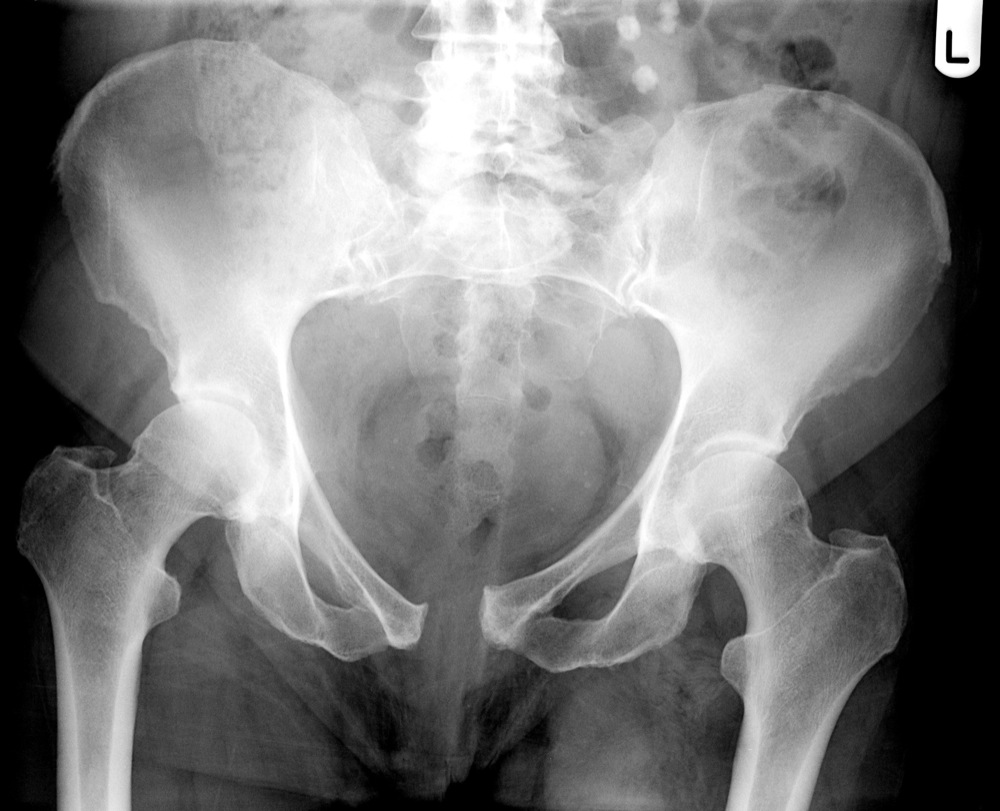
Dealing with Hip Fractures -- This study looked at whether in there was an increase in complications and hospital stay if patient's had to wait to have their hip fractures repaired. Mullins also reviewed the best imaging to use when trying to identify hip fractures. In other words, find them faster and fix them faster to reduce mortality and morbidity.
Hip fractures in the elderly increase the risk of death in the months and years following the injury. Recently researchers have found that a 48 hour delay in the surgical repair or stabilization of a hip fracture increases risks of complications. Thanks to an aging population, we can expect to encounter twice as many hip fractures by 2040 with 15 percent of the population experiencing this injury by age 80.
However, finding them on plain films isn't always easy. One out of every twenty patients my not have a fracture that you can see on X-ray.
Researchers found MRI to be the gold standard for identifying occult hip fractures. Best practice would then be to get an MRI and to surgery if indicated in the first 24 hours following the injury.
#3
Best Pressors: Dopamine or Norepinepherine - Researchers studied Dopamine vs. Norepinepherine for use in patients low blood pressure due to shock. The premise being that Dopamine will cause more heat problems. Indeed, twice as many patients developed atria fibrillation in the Dopamine group -- however the overall survival outcome was the same.
"A lot of dead patients in this study. This group of patients were all pretty sick ... there was a high risk they were going to die of something," Mullins told the conference. "That may be an indication that we're winning the battle but losing the war with these type of patients."
Mullins added that there is a lot variability in biochemistry that may increase the chances that a particular patient is susceptible to a particular medication. In the future, Mullins said, genetic testing may determine the optimal drug course. That discussion lead right into topic #2.
#2
Genetic Variation Affects Mortality - The secret to a long life -- or at least surviving trauma -- may be as simple as picking your parents. In this study researchers studied trauma patients with genetic variation that changed the production of three specific proteins that have been shown to be crucial to survival when a patient goes into shock. About 20 percent of the population has a Single Nucleotide Polymorphism (SNP pronounced SNiP) where the change in just a single nucleotide is enough to change protein synthesis in a significant way.
Vanderbilt researchers found the death rate in trauma patients studied was half as much in the patients with the abnormal gene. Of the three proteins studied, the one associated with the Beta 2 adrendergic receptor was the most significant player. Researchers found that the abnormal protein actually provided the patient with survival advantage.
Another study focused on SNPs involved in the complement cascade. Here again there was a significant difference in mortality observed for those with the SNP (20 percent) versus those without the genetic variation (11 percent.) The abnormal genome patients also had higher pneumonia rates.
"In the future, we'll be able to map our genes and decide which drug will have the best effect for you," Mullins said. "The other side of this of course is the privacy issue. I'm sure the insurance company will get a hold of this information and find a way to charge you more based on your genetic profile."
#1
Using Morphine in Trauma to Prevent PTSD - Post Traumatic Stress Disorder (PTSD) can be a long term source of disability following major trauma. Studies have found that up to 25 percent of patients with serious injuries had some level of PTSD one year after the injury. The magnitude of pain, stress and anxiety experienced at the time of injury may create an exaggerated response to stress in the amygdala that potentiates for the development of PTSD long after the event is over. Could medications given at the time of the event decrease the psychiatric stress of the event two years later?
Since the amygdala has opiate receptors, researchers looked at service men and women injured in the war in Iraq to see if there was a difference for those who got morphine as part of their trauma resuscitation versus those who did not. The study excluded those with traumatic brain injuries. The results showed a significant increase in PTSD for those given morphine in the first 24 hours versus those who did not. In fact, the patients without PTSD were more likely to have more severe injury and/or amputation
Another study supported these findings, demonstrating an inverse relationship between higher doses of morphine and less severe PTSD.
Mullins brought in a different study for perspective on the use of narcotics. A Dutch study looked at the medications given for pain for Dutch and American patients being treated for hip and ankle injuries. The study found that 85 percent of Americans and 58 percent of the Dutch received narcotics while in the hospital. Moreover, 77 percent of the Americans were sent home with narcotic perscriptions. None of the Dutch patients got narcs at home. Outcomes appeared to be similar.
"These studies seem to indicate that narcotics should be administered during the initial phase of evaluation following injury, "Mullins said. "Maybe we should be giving more earlier and less later."
#5
Etomidate and RSI -- already covered this one on full HERE. Basically, researchers have found that Etomidate causes changes in the adrenal system even when used as just a bolus for RSI. Studies compared Etomidate vs. Ketamine for RSI and found that -- particularly for septic patients -- there may be an advantage. Although they found differences in cortisol levels, however, they didn't find much change in outcome. Read the full blog post.
#4
Dealing with Hip Fractures -- This study looked at whether in there was an increase in complications and hospital stay if patient's had to wait to have their hip fractures repaired. Mullins also reviewed the best imaging to use when trying to identify hip fractures. In other words, find them faster and fix them faster to reduce mortality and morbidity.
Hip fractures in the elderly increase the risk of death in the months and years following the injury. Recently researchers have found that a 48 hour delay in the surgical repair or stabilization of a hip fracture increases risks of complications. Thanks to an aging population, we can expect to encounter twice as many hip fractures by 2040 with 15 percent of the population experiencing this injury by age 80.
However, finding them on plain films isn't always easy. One out of every twenty patients my not have a fracture that you can see on X-ray.
Researchers found MRI to be the gold standard for identifying occult hip fractures. Best practice would then be to get an MRI and to surgery if indicated in the first 24 hours following the injury.
#3
Best Pressors: Dopamine or Norepinepherine - Researchers studied Dopamine vs. Norepinepherine for use in patients low blood pressure due to shock. The premise being that Dopamine will cause more heat problems. Indeed, twice as many patients developed atria fibrillation in the Dopamine group -- however the overall survival outcome was the same.
"A lot of dead patients in this study. This group of patients were all pretty sick ... there was a high risk they were going to die of something," Mullins told the conference. "That may be an indication that we're winning the battle but losing the war with these type of patients."
Mullins added that there is a lot variability in biochemistry that may increase the chances that a particular patient is susceptible to a particular medication. In the future, Mullins said, genetic testing may determine the optimal drug course. That discussion lead right into topic #2.
#2
Genetic Variation Affects Mortality - The secret to a long life -- or at least surviving trauma -- may be as simple as picking your parents. In this study researchers studied trauma patients with genetic variation that changed the production of three specific proteins that have been shown to be crucial to survival when a patient goes into shock. About 20 percent of the population has a Single Nucleotide Polymorphism (SNP pronounced SNiP) where the change in just a single nucleotide is enough to change protein synthesis in a significant way.
Vanderbilt researchers found the death rate in trauma patients studied was half as much in the patients with the abnormal gene. Of the three proteins studied, the one associated with the Beta 2 adrendergic receptor was the most significant player. Researchers found that the abnormal protein actually provided the patient with survival advantage.
Another study focused on SNPs involved in the complement cascade. Here again there was a significant difference in mortality observed for those with the SNP (20 percent) versus those without the genetic variation (11 percent.) The abnormal genome patients also had higher pneumonia rates.
"In the future, we'll be able to map our genes and decide which drug will have the best effect for you," Mullins said. "The other side of this of course is the privacy issue. I'm sure the insurance company will get a hold of this information and find a way to charge you more based on your genetic profile."
#1
Using Morphine in Trauma to Prevent PTSD - Post Traumatic Stress Disorder (PTSD) can be a long term source of disability following major trauma. Studies have found that up to 25 percent of patients with serious injuries had some level of PTSD one year after the injury. The magnitude of pain, stress and anxiety experienced at the time of injury may create an exaggerated response to stress in the amygdala that potentiates for the development of PTSD long after the event is over. Could medications given at the time of the event decrease the psychiatric stress of the event two years later?
Since the amygdala has opiate receptors, researchers looked at service men and women injured in the war in Iraq to see if there was a difference for those who got morphine as part of their trauma resuscitation versus those who did not. The study excluded those with traumatic brain injuries. The results showed a significant increase in PTSD for those given morphine in the first 24 hours versus those who did not. In fact, the patients without PTSD were more likely to have more severe injury and/or amputation
Another study supported these findings, demonstrating an inverse relationship between higher doses of morphine and less severe PTSD.
Mullins brought in a different study for perspective on the use of narcotics. A Dutch study looked at the medications given for pain for Dutch and American patients being treated for hip and ankle injuries. The study found that 85 percent of Americans and 58 percent of the Dutch received narcotics while in the hospital. Moreover, 77 percent of the Americans were sent home with narcotic perscriptions. None of the Dutch patients got narcs at home. Outcomes appeared to be similar.
"These studies seem to indicate that narcotics should be administered during the initial phase of evaluation following injury, "Mullins said. "Maybe we should be giving more earlier and less later."
4.27.2010
Are Equestrian Injuries Inevitable?
Lindsay has been bugging me for a horse again. She's only been doing that for nine years. I knew it was coming. On the way home from our first ultrasound -- when we discovered we were having a girl -- my first thought was "oh now, now we're going to have to get a pony."
I grew up around horses and I've recently seen the sort of injuries a horse can inflict both in my ambulance and in the Emergency Department. So I was pretty interested in Dr. John Mayberry's presentation at the Northwest States Trauma Conference last week asking whether horse injuries are inevitable or preventable.
Horses used to be prey animals and as such still retain that fight or flight instinct despite a couple thousand years of domestication. Most horses are 5 - 15 times larger, 20 - 40 times stronger and three times faster than we are, Mayberry explained. They way an average of 800 pounds. Sit your little but on top of one and you head is 10 feet off the ground.
Not surprising then that according to the American Medical Equestrian Association, we see upwards of 74,000 Emergency Room visits including 14,000 children thanks to horses. You chances of getting injured riding horseback is higher -- on a per-hour basis -- than riding a motorcycle or racing a car, according to the CDC.
So does it have to be that way? Are injuries preventable?
Mayberry's review of the available research came to a couple important conclusions:
Increasing skill can decrease injuries. One study looked at the United States Pony Clubs where helmet use is required and systematic testing and skill development is practiced. Even though these riders were jumping their horses and invovled in other sporting activities, the overall injury and severity was 1 incident per 169,000 hours of horse-related activities. Of those injuries 8 percent required no treatment while 17 percent required hospitalization. Close to half the injuries happened to students at the lowest skill level with a somewhat even distribution across ages. Researchers made a point to note that skill level did not equate to experience or hours in the saddle -- even idiots can ride a horse. Dr. Doris "Bixby Hammett concluded that experience does not constitute skill," Mayberry notes. "In fact, injuries seem to decrease with increased knowledge, skill and ability rather than with age and experience."
The Pony Club study highlights two things rare in the horse-riding world - helmet use and an intensely structured training regimen. (Although advocacy organizations are increasingly pushing helmet use.) Outside the pony club, head injuries are higher and the incidence and severity of injuries are higher. Another study found that horse-related injuries are greater in severity than car wrecks and similar in severity to bicycle crashes.
Moreover one in five equestrians "will be seriously injured during their riding career and that approxamately 100 hours of experience are required to achieve substantial decline in the risk of injury." Novice riders are five times more likely to have a serious injury from a horse compared to a more advanced rider.
Mayberry's group asked experienced riders what they would tell those novices. Here's a sample of the advice they gave:
Mayberry also included some great quotes from the experience equestrians. Here's my favorite:
"I train BLM Mustangs, Only God Herself can protect me."
I grew up around horses and I've recently seen the sort of injuries a horse can inflict both in my ambulance and in the Emergency Department. So I was pretty interested in Dr. John Mayberry's presentation at the Northwest States Trauma Conference last week asking whether horse injuries are inevitable or preventable.
Horses used to be prey animals and as such still retain that fight or flight instinct despite a couple thousand years of domestication. Most horses are 5 - 15 times larger, 20 - 40 times stronger and three times faster than we are, Mayberry explained. They way an average of 800 pounds. Sit your little but on top of one and you head is 10 feet off the ground.
Not surprising then that according to the American Medical Equestrian Association, we see upwards of 74,000 Emergency Room visits including 14,000 children thanks to horses. You chances of getting injured riding horseback is higher -- on a per-hour basis -- than riding a motorcycle or racing a car, according to the CDC.
So does it have to be that way? Are injuries preventable?
Mayberry's review of the available research came to a couple important conclusions:
Increasing skill can decrease injuries. One study looked at the United States Pony Clubs where helmet use is required and systematic testing and skill development is practiced. Even though these riders were jumping their horses and invovled in other sporting activities, the overall injury and severity was 1 incident per 169,000 hours of horse-related activities. Of those injuries 8 percent required no treatment while 17 percent required hospitalization. Close to half the injuries happened to students at the lowest skill level with a somewhat even distribution across ages. Researchers made a point to note that skill level did not equate to experience or hours in the saddle -- even idiots can ride a horse. Dr. Doris "Bixby Hammett concluded that experience does not constitute skill," Mayberry notes. "In fact, injuries seem to decrease with increased knowledge, skill and ability rather than with age and experience."
The Pony Club study highlights two things rare in the horse-riding world - helmet use and an intensely structured training regimen. (Although advocacy organizations are increasingly pushing helmet use.) Outside the pony club, head injuries are higher and the incidence and severity of injuries are higher. Another study found that horse-related injuries are greater in severity than car wrecks and similar in severity to bicycle crashes.
Moreover one in five equestrians "will be seriously injured during their riding career and that approxamately 100 hours of experience are required to achieve substantial decline in the risk of injury." Novice riders are five times more likely to have a serious injury from a horse compared to a more advanced rider.
Mayberry's group asked experienced riders what they would tell those novices. Here's a sample of the advice they gave:
- Don't ride an unfamiliar horse alone
- Make sure your skill level and the horse skill level mix
- Don't buy a big horse for a little girl
- Never get on a horse you don't know
- Wear long pants and gloves
- Wear a helmet even for leading a horse
- Boots are the best safety item
- Be aware of other animals
- Watch your footing when leading a horse, if you stumble the horse will spook
- Watch out for dogs, children, goats -- all of which can spook horses
- Do not ride in a muddy field
- Be patient when training a horse
- Treat each horse as a individual
- Pay attention to the horse's body language
Mayberry also included some great quotes from the experience equestrians. Here's my favorite:
"I train BLM Mustangs, Only God Herself can protect me."
4.26.2010
Etomidate vs. Ketamine for RSI
We use the drug Etomidate all the time as a sedative prior to paralyzing patients for intubation. As part of our Rapid Sequence Intubation kit, it is a great little drug. Works fast, has proven very safe and the effects don't last long. We also use it for moderate sedations procedures. It is a forgiving and easy drug to use.
When I first started doing moderate sedations on kiddos at a different hospital, I often used a different drug -- Ketamine. It can be given IM or IV and works great for pediatric sedations. That said, it sometimes has side effects that can make it a little less fun for patients and parents when the sedation is over. When coming out of Ketamine sedations -- especially when the drug is given IM or higher IV doses -- it can produce hallucinations and recovery agitation. Sometimes these hallucinations are disturbing -- and can be particularly so for a parent watching and holding little Johnny while he goes through this bad trip.
So why are some researchers proposing that we drop Etomidate in favor of Ketamine?
As presented at the 21st Annual Northwest States Trauma Conference, Etomidate appears to have an effect on cortisol levels that can linger long after the rapid, single bolus used for induction. This adrenal suppression that results from Etomidate has been known about for some time. Researchers wanted to know if the single bolus used for RSI could do the same. When a Harborview Medical Center study compared Etomidate RSI with a benzo/narcotic combination -- "patients given Etomidate had a nearly fourfold greater risk of respiratory failure and an average of three more days of mechanical ventilation."
Another study -- published in the Lancet -- compared Etomidate and Ketamine. By studying two groups in a randomized trial - one using Ketamine for induction and the other use Etomidate, a study found that adrenal function was significantly lower when Etomidate was used for RSI (86% vs 48 %). However, there was no significant change in mortality (35% for Etomidate vs 31% for Ketamine) or clinical outcome for trauma patients. Given these results, the researchers concluded that "Ketamine is a safe and valuable alternative to etomidate for critically ill patients, particularly for septic patients."
So are we going to start seeing a switch to Ketamine for RSI?
OHSU Professor of Surgery Richard Mullins picked this study as one of his Trauma Top Ten at the Northwest States Trauma Conference, but expressed some doubts given that there was no significant change in outcome.
"The reality is, hundreds or thousands of people have been intubated using Etomidate over the years and we don't have hundreds of thousands of dead bodies," Mullins said.
When I first started doing moderate sedations on kiddos at a different hospital, I often used a different drug -- Ketamine. It can be given IM or IV and works great for pediatric sedations. That said, it sometimes has side effects that can make it a little less fun for patients and parents when the sedation is over. When coming out of Ketamine sedations -- especially when the drug is given IM or higher IV doses -- it can produce hallucinations and recovery agitation. Sometimes these hallucinations are disturbing -- and can be particularly so for a parent watching and holding little Johnny while he goes through this bad trip.
So why are some researchers proposing that we drop Etomidate in favor of Ketamine?
As presented at the 21st Annual Northwest States Trauma Conference, Etomidate appears to have an effect on cortisol levels that can linger long after the rapid, single bolus used for induction. This adrenal suppression that results from Etomidate has been known about for some time. Researchers wanted to know if the single bolus used for RSI could do the same. When a Harborview Medical Center study compared Etomidate RSI with a benzo/narcotic combination -- "patients given Etomidate had a nearly fourfold greater risk of respiratory failure and an average of three more days of mechanical ventilation."
Another study -- published in the Lancet -- compared Etomidate and Ketamine. By studying two groups in a randomized trial - one using Ketamine for induction and the other use Etomidate, a study found that adrenal function was significantly lower when Etomidate was used for RSI (86% vs 48 %). However, there was no significant change in mortality (35% for Etomidate vs 31% for Ketamine) or clinical outcome for trauma patients. Given these results, the researchers concluded that "Ketamine is a safe and valuable alternative to etomidate for critically ill patients, particularly for septic patients."
So are we going to start seeing a switch to Ketamine for RSI?
OHSU Professor of Surgery Richard Mullins picked this study as one of his Trauma Top Ten at the Northwest States Trauma Conference, but expressed some doubts given that there was no significant change in outcome.
"The reality is, hundreds or thousands of people have been intubated using Etomidate over the years and we don't have hundreds of thousands of dead bodies," Mullins said.
4.22.2010
Dr. Mullins Trauma Top Ten (part one)
Day two of the 21st Annual Northwest States Trauma Conference here in Sunriver and we get an early start counting down some of the latest research in trauma care. OHSU Trauma Surgery Eminence Dr. Richard Mullins held forth on the following hot topics.
#10
CT versus Laparotomy with penetrating wounds to the abdomen - The question: how do we best find injuries in the abdomen with patients presenting with penetrating abdominal wounds? Do we CT them? Open them up and look around or do serial, noninvasive physical exams.
The OAKLAND group found that CT was a great way find to triage abdominal injuries if "mandatory laparotomy signs" weren't present. Out of 306 patients, half of which got CT exams and only two false negatives were found. "That's pretty good," said Mullins, "but I think those guys probably missed a few more holes in the diaphragm." In any case, the Oakland group was dealing mostly with gunshot wounds and a lot of them.
The WESTERN just focused on stab wounds and defined the abdomen as below the costal margin. This group did wound exploration. Positive findings bought the patient 23 hours of serial physical exams. If they weren't showing signs of peritonitis, bleeding and were still hemodynamically stable, they got to go home.
The EASTERN trauma surgeons agree that serial physical exam is reliable IF there is a system to follow for the exams and a systematic way to record any changes. In otherwords, observation only works if you pay attention.
Mullins said he likes a delayed CT with oral contrast after six hours if there is still the possibility of damage to the bowel.
#9
Using CT to determine which kidney injuries require intervention - One 5th of cardiac output is going to the renal system, so trauma can cause rapid exsanguination. So who needs surgical intervention or angioembolization to control bleeding? Who will get better if you just observe them? Researchers found that injury scales are valid, correlating highly with outcomes. We also know now that there are three features of grade 3 and 4 renal injuries that require intervention to control bleeding. Most can be managed -- and managed earlier with angioembolization rather than later surgery and need for blood transfusions.
#8
Surrogate and Doctor Expectations regarding ICU patient's long term Outcomes - This study was fascinating and sad. Surgeons managing a ICU patient on long term ventilation go to family members to ask for permission to put in a tracheostomy. Twenty percent of the patients died after the trach and of those that lived, only one out of 10 patients was doing well one year after discharge from the hospital to long term care. When asked of expected outcomes, neither the doctors, nor the surrogate decisionmakers were anywhere close to the reality of the outcomes. Worse, when the surrogates and family members were asked what had happened in the past year, 49 percent reported more stress in their lives and 84 percent had to quit their jobs to take care of the patient.
"We are looking at an enormous burden of families, and we need to communicate that accurately when we ask for persmission."
#7
Using procrit and other Erythropoiesis stimulating agents (ESAs) in patients with traumatic brain injuries - Usually ESAs are given to cancer patients to stimulate the growth of new red blood cells. However, this research looked at ten years of the drug's use in patient's with traumatic brain injuries. The death rate for those getting ESA was 8 percent compared to 24 percent in the other group. Strangely those getting the ESA had a lower hemoglobin on average than the control group.
#6
Using Warm Fresh Whole Blood for trauma - Recent studies have shown that "old blood is bad blood" Mullins says. "Older than 29 days and you have two times the risk of infection. Yet the FDA says that blood can be kept for 42 days."
This study looked at the use of warm fresh whole blood in trauma patients in Iraq. While fresh whole blood in almost never given in the US these days due to screening restriction, in Iraq, pre-screening of military donors allowed 6,000 units of fresh whole blood to be given right after donation. The results seem to be better trauma survival outcomes.
Why?
Even though the total red blood cells is the same, fresh blood has the plasma included.
"I think maybe the frozen plasma and platelets we give are not as good a coagulation cocktail as fresh warm blood," Mullin said. Studies in Japan have shown that trauma activates a coagulation cascade which consumes coagulation factors. Of the non-surviving trauma patients studied 87 percent had evidence of DIC. Fresh Warm Blood may stave off DIC in major trauma. "Some day blood donors will be part of the level one trauma team activation," Mullins concludes.
Read the Rest of the Top Ten HERE
#10
CT versus Laparotomy with penetrating wounds to the abdomen - The question: how do we best find injuries in the abdomen with patients presenting with penetrating abdominal wounds? Do we CT them? Open them up and look around or do serial, noninvasive physical exams.
The OAKLAND group found that CT was a great way find to triage abdominal injuries if "mandatory laparotomy signs" weren't present. Out of 306 patients, half of which got CT exams and only two false negatives were found. "That's pretty good," said Mullins, "but I think those guys probably missed a few more holes in the diaphragm." In any case, the Oakland group was dealing mostly with gunshot wounds and a lot of them.
The WESTERN just focused on stab wounds and defined the abdomen as below the costal margin. This group did wound exploration. Positive findings bought the patient 23 hours of serial physical exams. If they weren't showing signs of peritonitis, bleeding and were still hemodynamically stable, they got to go home.
The EASTERN trauma surgeons agree that serial physical exam is reliable IF there is a system to follow for the exams and a systematic way to record any changes. In otherwords, observation only works if you pay attention.
Mullins said he likes a delayed CT with oral contrast after six hours if there is still the possibility of damage to the bowel.
#9
Using CT to determine which kidney injuries require intervention - One 5th of cardiac output is going to the renal system, so trauma can cause rapid exsanguination. So who needs surgical intervention or angioembolization to control bleeding? Who will get better if you just observe them? Researchers found that injury scales are valid, correlating highly with outcomes. We also know now that there are three features of grade 3 and 4 renal injuries that require intervention to control bleeding. Most can be managed -- and managed earlier with angioembolization rather than later surgery and need for blood transfusions.
#8
Surrogate and Doctor Expectations regarding ICU patient's long term Outcomes - This study was fascinating and sad. Surgeons managing a ICU patient on long term ventilation go to family members to ask for permission to put in a tracheostomy. Twenty percent of the patients died after the trach and of those that lived, only one out of 10 patients was doing well one year after discharge from the hospital to long term care. When asked of expected outcomes, neither the doctors, nor the surrogate decisionmakers were anywhere close to the reality of the outcomes. Worse, when the surrogates and family members were asked what had happened in the past year, 49 percent reported more stress in their lives and 84 percent had to quit their jobs to take care of the patient.
"We are looking at an enormous burden of families, and we need to communicate that accurately when we ask for persmission."
#7
Using procrit and other Erythropoiesis stimulating agents (ESAs) in patients with traumatic brain injuries - Usually ESAs are given to cancer patients to stimulate the growth of new red blood cells. However, this research looked at ten years of the drug's use in patient's with traumatic brain injuries. The death rate for those getting ESA was 8 percent compared to 24 percent in the other group. Strangely those getting the ESA had a lower hemoglobin on average than the control group.
#6
Using Warm Fresh Whole Blood for trauma - Recent studies have shown that "old blood is bad blood" Mullins says. "Older than 29 days and you have two times the risk of infection. Yet the FDA says that blood can be kept for 42 days."
This study looked at the use of warm fresh whole blood in trauma patients in Iraq. While fresh whole blood in almost never given in the US these days due to screening restriction, in Iraq, pre-screening of military donors allowed 6,000 units of fresh whole blood to be given right after donation. The results seem to be better trauma survival outcomes.
Why?
Even though the total red blood cells is the same, fresh blood has the plasma included.
"I think maybe the frozen plasma and platelets we give are not as good a coagulation cocktail as fresh warm blood," Mullin said. Studies in Japan have shown that trauma activates a coagulation cascade which consumes coagulation factors. Of the non-surviving trauma patients studied 87 percent had evidence of DIC. Fresh Warm Blood may stave off DIC in major trauma. "Some day blood donors will be part of the level one trauma team activation," Mullins concludes.
Read the Rest of the Top Ten HERE
Swag
Cool, filled my swag bag. Lifeflight and Airlink are here giving out stainless steel water bottles. Akward. Plus a couple pharma companies pushing MRSA drugs -- like we ever see THAT in the ER.
House of God Rules
Already a few references to the book House of God. For your edification, the rules are listed below:
- GOMERS DON’T DIE.
- GOMERS GO TO GROUND.
- AT A CARDIAC ARREST, THE FIRST PROCEDURE IS TO TAKE YOUR OWN PULSE.
- THE PATIENT IS THE ONE WITH THE DISEASE.
- PLACEMENT COMES FIRST.
- THERE IS NO BODY CAVITY THAT CANNOT BE REACHED WITH A #14G NEEDLE AND A GOOD STRONG ARM.
- AGE + BUN = LASIX DOSE.
- THEY CAN ALWAYS HURT YOU MORE.
- THE ONLY GOOD ADMISSION IS A DEAD ADMISSION.
- IF YOU DON’T TAKE A TEMPERATURE, YOU CAN’T FIND A FEVER.
- SHOW ME A BMS (Best Medical Student, a student at the Best Medical School) WHO ONLY TRIPLES MY WORK AND I WILL KISS HIS FEET.
- IF THE RADIOLOGY RESIDENT AND THE MEDICAL STUDENT BOTH SEE A LESION ON THE CHEST X-RAY, THERE CAN BE NO LESION THERE.
- THE DELIVERY OF GOOD MEDICAL CARE IS TO DO AS MUCH NOTHING AS POSSIBLE.
4.21.2010
Trauma Rads
First up after registration is a Radiology Review. Frankly CT scans and Ultrasounds look like Rorschach's tests to me. I can see something when the doc or the CT tech points it out, but on my own I'm never quite sure what I'm looking at. Oh, I can spot a brain-bleed and a broken leg most times but not much more than that.
Radiology review seems like it primary designed for the providers -- the panel is two radiologists and two surgeons. They argue enough for me to realize that I'm not the only one who has trouble picking up on the difference between a subtle pneumo and a skin fold.
We get to see some impressive sternal fractures and one of the radiologists gives us tips on how to spot them by the high density blood behind the sternum. Apparently these are often found as seatbelt injuries.
The subject changes to unexpected Pulmonary Embolisms -- the majority of which are incidental.
One of the surgeons on the panel says that fractures damage the bone marrow, which of course is full of ebolitic material. There is also a spike in the coagulation factors right after a trauma. Studies have shown that hypercoagulability is highest in the 24 hours after the traumatic event then decreases over a period of about three days. So why do some patients throw a PE after a simple pelvis fracture and die while others suffer no ill effects? "Genetics" explains the other surgeon. This is the "Cave Man Bonus" -- a trait that probably helped save our ancestors from the saber tooth tiger bite, but these days can cause major problems.
We look at lungs and how to tell when what appears to be a wide mediastinum is a bad thing.
We learn the trick for finding pneumos ... look for a thin, white line with black on both sides. People have gotten chest tubes for skin folds that look like pneumos. Yikes.
We learn that fallen lung sign is a bad thing.
We see great images of chest tubes is all the wrong places. Yikes!
I've been here only a few hours and here's our first open book fracture images -- yup, that will keep me from buying a motorcycle for another few years. Poor dude lost a testicle. Note: blood at meatus = no foley, but you already knew that.
Kidneys, Spleens.
Oh, and for the record, most Rorschach images look like CT scans to me, so what do I know.
Northwest States Trauma Conference!
While my coworkers back at the hospital deal with the inevitable 10 o'clock rush, I'm sitting in a hotel room at the Sunriver Resort, a gentle fire in the fireplace watching the Seattle Mariners replay. Sure I feel guilty, but I'm feel better knowing how much I'll be learning here at the 21st Annual Northwest States Trauma Conference. I'll be honest, when I signed up for it, I thought it was going to be in Portland since it is sponsored by OHSU! Oh well! Anyway, I'll try to keep you posted on everything I learn, that will make me feel a little less guilty.
Subscribe to:
Posts (Atom)
If You Want to Make God Laugh...
Early on in the pandemic one of my daughters exclaimed "Covid ruins everything!" It became a running joke in our house, a bitter...

-
General Information about Burns One of the most painful injuries that one can ever experience is a burn injury. When a burn occurs to the...
-
Communications Communication is one of the most important tools in the medical profession. The better the communication, the better care ...
-
Droperidol / Inapsine is back in the Emergency Room. Is it safe? When I was a new nurse in the Emergency Room of a little coastal hospita...