Search This Blog

Showing posts with label Emergency Room. Show all posts

2.16.2012

Standing in line for my pseudoephedrine

Interesting essay from the Atlantic about the societal costs of curbing access to the cold medicine pseudoephedrine.  It's the latest bouncing around the blogosphere following the introduction of legislation to make an effective cold medicine prescription-only. 
In Do We Need Even Tighter Controls On Sudafed?  Megan McArdle argues that requiring cold suffers to go to their doctor to get a prescription for pseudoephedrine (PSE) creates an unnecessary burden on the health care system when compared with its impact on cleaning up amateur meth labs. 
The author seems to have done some math, but her research into the history and scope of meth appears limited to a few episodes of Breaking Bad. (For an excellent investigation into the history of the current epidemic, I suggest this Oregonian investigation. She states that controls on pseudoephedrine are aimed at controlling meth lab explosions from "amateur" cooks (who cooks meth as a hobby?) in the midwest.
Actually, meth was a long time Northwest phenomenon. For two decades law enforcement officials had trouble getting anyone back East to take it seriously.  I know, because I was a cops and courts newspaper reporter in the days when meth was exploding in the 1990s. These days, I'm on the other front line -- treating meth addicts daily for the toxic effects of abuse.
This is not a case of toxic labs and benign recreational drug -- the drug itself is toxic too. Making tighter controls on the ingredients was originally an effort to make it harder to get the drug, not just more difficult to make. 
Rural communities -- ill funded an ill equipped to do toxic clean up work -- were overwhelmed when meth was home grown. Fragile ecosystems, national parks, wildlife refuges and rural water supplies were contaminated and endangered by meth labs. Oregon's requirement for prescription-only pseudoephedrine helped cut these meth lab incidents down to zero. 
Indeed, controls like those imposed in Oregon and Washington helped create the large scale meth factories in Mexico. This is not a product we want Made in the USA if we can help it. When Mexico banned the main component of meth cooking outright in 2009, production started shifting back to the United States -- this time to places in the country with larger potential markets and less restrictive purchasing of the main ingredient.  
Outside of Oregon, meth cooks have found ways around the registration laws by using proxies and false ID to get PSE in states that don't require a prescription. 
As Oregon lawmaker Rob Bovett recently wrote for the New York Times in an Op-Ed that kicked off the debate:
The only effective solution is to put the genie back in the bottle by returning pseudoephedrine to prescription-drug status. That’s what Oregon did more than four years ago, enabling the state to eliminate smurfing and nearly eradicate meth labs. This is part of the reason that Oregon recently experienced the steepest decline in crime rates in the 50 states.


The problem is that pseudoephedrine is an effective cold medicine where as the replacement ingredient in Sudafed  Phenylephrine (hydrochloride)  is not. That means that some people will go the extra mile to "get the good stuff."  Here is Washington, you have to sign a registry and show ID at the pharmacy counter -- it is embarrassing, but not much of a hassle. I've done it. 
In Oregon, you need a script. Oregon Sen. Ron Wyden is now proposing that the drug be prescription-only nationwide. 
Sure, if you imagine all those cold suffers that currently buy Sudafed over the counter going to their primary care doc to get scripts, that's going to add up. Most folks will just suffer through the cold or buy something else. The companies that make PSE will see profits dry up.
Thus far, however, the authors of this debate fail to mention the societal costs of Meth in realistic terms. Meth addicts make up a substantial population of those treated in the Emergency Room for everything from abscesses, life-threatening infections, meth-induced psychosis and dental pain. 
Making PSE prescription only is an escalation in an arms race over a dangerous and toxic drug with massive societal impacts -- much greater in scale that the profits of a drug company or the comfort of those suffering through a runny nose. 


Required Reading: Unnecessary Epidemic

4.22.2010

RED's Rules


Okay, I've been having to train new nurses lately. Not just new nurses to the ED. But nurses that are new to everything. I've been giving them my rules. Mine aren't as refined as the House of God rules, but I'll keep working on them. I'll take suggestions too! 


  1. Bringing a crash cart into the room can ward off evil spirits.
  2. Don't panic. If the airway is patent, get a set of vitals. It's useful information and buys you time to figure out your next move. Moreover, it makes you look like you know what  you are doing.
  3. We have to treat all our patients, not just the nice ones.
  4. The patient is not the enemy. 
  5. There are many reason for people to be assholes - demanding, agitated, argumentative. Sometimes it is an underlying disorder of the personality that you have no control over. Sometimes it is because they are dying. Often they don't know what to expect and aren't used to being powerless. At the very least, it may be because you just met them on the worst day of their life. This is a good possibility given that they are in an emergency room.
  6. You job is to try and be the best part of the worst day of their life.
  7. The Emergency Department is an easy place for a nurse to kill people. If you don't walk into work a little scared of doing so, you probably aren't paying attention.
  8. Err on the side of the patient. Over time, it is always easier if you do the right thing in the first place. That said, it is never too late to do the right thing.
  9. Doctors will yell at you for doing the wrong thing just as they will sometimes yell at you for doing the right thing. Thus, it's easier to do the right thing. 
  10. You are never the most important person in the patient's room.
  11. Don't pre-anger the patients in triage. Don't argue with patients in triage ... just nod your head and get as much information as you can. Let the doctor piss the patient off or do your discharge teaching right before you send them out the door -- not in the triage room.
  12. The one time you don't do what you always do, you will get burned.
  13. If a patient says they have esophageal varricies and their chief complaint is "vomiting" they need two large bore IVs -- even if their vitals are perfect and they look the picture of health. 
  14. Chart like your license depends on it.
  15. EKGs are cheap, undetected MI's are expensive. If you ask yourself: "Should I get a 12 lead?" The answer is always yes. 
  16. Check blood sugar on anyone with altered LOC.
  17. You patient's blood pressure will drop about ten minutes after you start the IV antibiotics and just before you admit them. 
  18. Don't DC an IV until the patient is dressed and in the wheel chair ready for discharge.
  19. Don't argue with drunks or crazy people. 
  20. Some people suffer from undiagnosed UAD (Underlying Asshole Disorder) 
  21. Don't take it personal. They don't know you, and with any luck you won't see them tomorrow. 
  22. Leave 'em better than you found 'em and you've done your job. 
  23. Nurses don't work for doctors, they work for patients.

House of God Rules

Already a few references to the book House of God.  For your edification, the rules are listed below:
  1. GOMERS DON’T DIE.
  2. GOMERS GO TO GROUND.
  3. AT A CARDIAC ARREST, THE FIRST PROCEDURE IS TO TAKE YOUR OWN PULSE.
  4. THE PATIENT IS THE ONE WITH THE DISEASE.
  5. PLACEMENT COMES FIRST.
  6. THERE IS NO BODY CAVITY THAT CANNOT BE REACHED WITH A #14G NEEDLE AND A GOOD STRONG ARM.
  7. AGE + BUN = LASIX DOSE.
  8. THEY CAN ALWAYS HURT YOU MORE.
  9. THE ONLY GOOD ADMISSION IS A DEAD ADMISSION.
  10. IF YOU DON’T TAKE A TEMPERATURE, YOU CAN’T FIND A FEVER.
  11. SHOW ME A BMS (Best Medical Student, a student at the Best Medical School) WHO ONLY TRIPLES MY WORK AND I WILL KISS HIS FEET.
  12. IF THE RADIOLOGY RESIDENT AND THE MEDICAL STUDENT BOTH SEE A LESION ON THE CHEST X-RAY, THERE CAN BE NO LESION THERE.
  13. THE DELIVERY OF GOOD MEDICAL CARE IS TO DO AS MUCH NOTHING AS POSSIBLE.

4.21.2010

Trauma Rads

First up after registration is a Radiology Review. Frankly CT scans and Ultrasounds look like Rorschach's tests to me. I can see something when the doc or the CT tech points it out, but on my own I'm never quite sure what I'm looking at. Oh, I can spot a brain-bleed and a broken leg most times but not much more than that. 

Radiology review seems like it primary designed for the providers -- the panel is two radiologists and two surgeons. They argue enough for me to realize that I'm not the only one who has trouble picking up on the difference between a subtle pneumo and a skin fold. 

We get to see some impressive sternal fractures and one of the radiologists gives us tips on how to spot them by the high density blood behind the sternum.  Apparently these are often found as seatbelt injuries. 

The subject changes to unexpected Pulmonary Embolisms -- the majority of which are incidental. 

One of the surgeons on the panel says that fractures damage the bone marrow, which of course is full of ebolitic material. There is also a spike in the coagulation factors right after a trauma. Studies have shown that hypercoagulability is highest in the 24 hours after the traumatic event then decreases over a period of about three days. So why do some patients throw a PE after a simple pelvis fracture and die while others suffer no ill effects? "Genetics" explains the other surgeon.  This is the "Cave Man Bonus" -- a trait that probably helped save our ancestors from the saber tooth tiger bite, but these days can cause major problems.

We look at lungs and how to tell when what appears to be a wide mediastinum is a bad thing. 
We learn the trick for finding pneumos ... look for a thin, white line with black on both sides. People have gotten chest tubes for skin folds that look like pneumos. Yikes.
We learn that fallen lung sign is a bad thing.
We see great images of chest tubes is all the wrong places. Yikes!

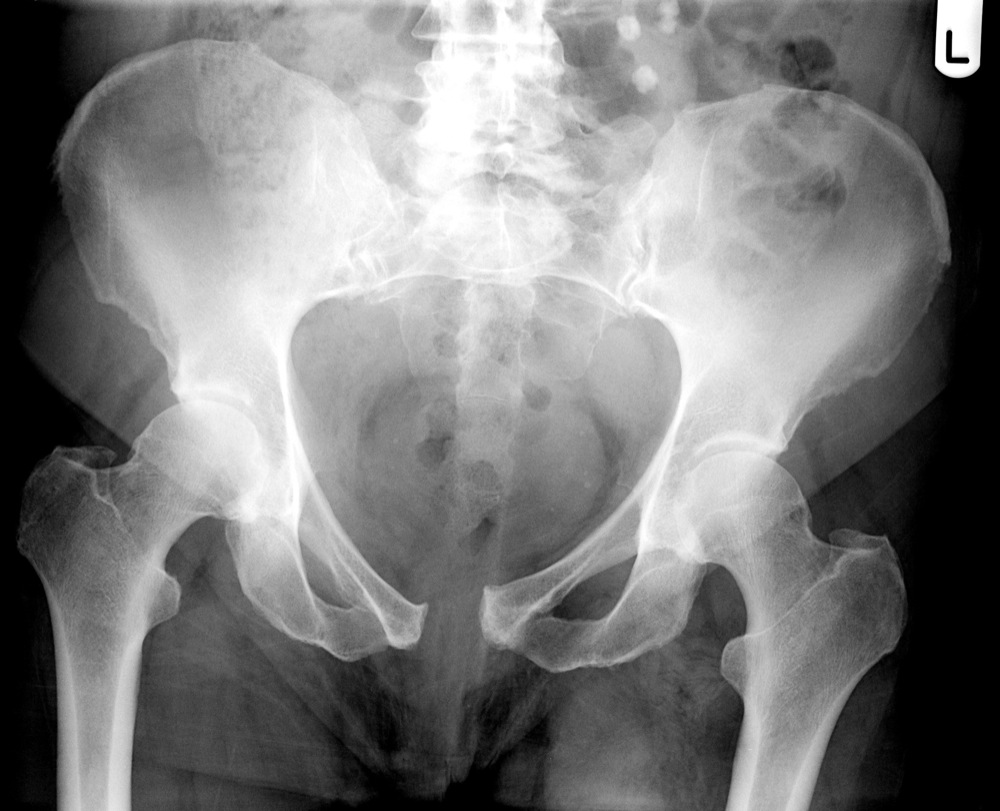
I've been here only a few hours and here's our first open book fracture images -- yup, that will keep me from buying a motorcycle for another few years. Poor dude lost a testicle. Note: blood at meatus = no foley, but you already knew that.

Kidneys, Spleens.

Oh, and for the record, most Rorschach images look like CT scans to me, so what do I know.

Northwest States Trauma Conference!

While my coworkers back at the hospital deal with the inevitable 10 o'clock rush, I'm sitting in a hotel room at the Sunriver Resort, a gentle fire in the fireplace watching the Seattle Mariners replay. Sure I feel guilty, but I'm feel better knowing how much I'll be learning here at the 21st Annual Northwest States Trauma Conference.  I'll be honest, when I signed up for it, I thought it was going to be in Portland since it is sponsored by OHSU! Oh well! Anyway, I'll try to keep you posted on everything I learn, that will make me feel a little less guilty.

8.06.2009

Drive Thru ER?

Over at the Wall Street Journal Health Blog, there's a post about one way to keep contagious people from swapping spittle around a crowded waiting room -- a drive-thru ED. The idea is that people could be triaged and treated in their cars in the parking garage rather than coming to the ED. Lot's of questions about how this would work, but seems like a pretty great idea in terms of flu like symptoms ... which, frankly, will be hard to treat. In fact triaging out the really sick people is likely to be our hardest job once swine flu hits with full force this fall.
By the Way: Read the latest about swine flu here: http://www.cdc.gov/H1N1FLU/

If You Want to Make God Laugh...

 Early on in the pandemic one of my daughters exclaimed "Covid ruins everything!"  It became a running joke in our house, a bitter...