
Search This Blog

Showing posts with label Trauma Nursing. Show all posts

4.29.2010

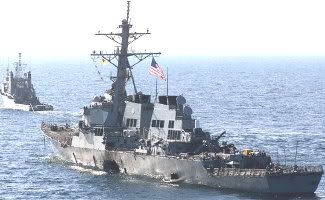
Damage Control - Keep Them From Sinking

When it comes to major trauma, often the role of the trauma team is Damage Control.

We are not attempting to fix all the problems a patient has at the time of presentation -- we may not even have time to identify all the damage suffered -- our primary goal is to stabilize the patient to allow for difinative treatment down the road.

"The concept of Damage Control came from the Navy," explained Dr. John Mayberry. "The idea was to keep a ship in combat from sinking, not to try and make all the repairs needed, just to try and get out of open water and get to port." Once safe at port, full repairs can be initiated.

This concept has long applied to trauma as well. Our job is to get the patient out of open water (the emergency department) and into port (the ICU) without sinking.

At last week's Northwest States Trauma Conference, two different approaches to damage control were presented. Mayberry - a professor of surgery at Oregon Health Science University - looked at 30 years of applying the damage control model to open abdominal wounds.  When a patient comes complex abdominal injuries and blood loss, they are often not stable enough to withstand the additional stresses of a long surgical proceedure to address every point of injury.

"Instead of definitive repair of multiple intra-abdominal injuries, the focus of damage control laparotomy is rapid control of hemorrhage, restitution of vital organ blood flow with temporary shunts, and closure of hollow viscus lacerations without anastomosis."

If major bleeding is the overriding problem, skin or fascia is closed tightly to produce tamponade. However, when tamponade  of bleeding is not vital, the belly is left open and and a Temporary Abdominal Closure (TAC) is used. As the patient is stabilized a series of operations are performed to repair injuries and remove packing, slowly closing the abdomen while attempting to avoid Intra-Abdominal Hypertension, he explained.

Temporary closure -- whether it be with a the good old Bogata Bag or the increasingly popular vacuum packs -- seems to yield good outcomes as far as recovery from injury and eventual return to work.
Measuring Intra-Abdominal pressures has been found to be beneficial to patients, increasing survival from 50 % to 72 % in one study while actually decreasing resource utilization.

Overall Mayberry's review concluded that the Damage Control approach to abdominal surgery is well worth it. Aggressive management of intra-abdominal hypertension and decompression is beneficial. Early progression to fascial closure prevents complications and long term outcomes are usually good.

4.26.2010

Etomidate vs. Ketamine for RSI

We use the drug Etomidate all the time as a sedative prior to paralyzing patients for intubation. As part of our Rapid Sequence Intubation kit, it is a great little drug. Works fast, has proven very safe and the effects don't last long. We also use it for moderate sedations procedures. It is a forgiving and easy drug to use.

When I first started doing moderate sedations on kiddos at a different hospital, I often used a different drug -- Ketamine. It can be given IM or IV and works great for pediatric sedations. That said, it sometimes has side effects that can make it a little less fun for patients and parents when the sedation is over. When coming out of Ketamine sedations -- especially when the drug is given IM or higher IV doses -- it can produce hallucinations and recovery agitation. Sometimes these hallucinations are disturbing -- and can be particularly so for a parent watching and holding little Johnny while he goes through this bad trip.

So why are some researchers proposing that we drop Etomidate in favor of Ketamine?

As presented at the 21st Annual Northwest States Trauma Conference, Etomidate appears to have an effect on cortisol levels that can linger long after the rapid, single bolus used for induction. This adrenal suppression that results from Etomidate has been known about for some time. Researchers wanted to know if the single bolus used for RSI could do the same. When a Harborview Medical Center study compared Etomidate RSI with a benzo/narcotic combination -- "patients given Etomidate had a nearly fourfold greater risk of respiratory failure and an average of three more days of mechanical ventilation."

Another study -- published in the Lancet -- compared Etomidate and Ketamine. By studying two groups in a randomized trial - one using Ketamine for induction and the other use Etomidate, a study found that adrenal function was significantly lower when Etomidate was used for RSI (86% vs 48 %). However, there was no significant change in mortality (35% for Etomidate vs 31% for Ketamine) or clinical outcome for trauma patients.  Given these results, the researchers concluded that "Ketamine is a safe and valuable alternative to etomidate for critically ill patients, particularly for septic patients."

So are we going to start seeing a switch to Ketamine for RSI?

OHSU Professor of Surgery Richard Mullins picked this study as one of his Trauma Top Ten at the Northwest States Trauma Conference, but expressed some doubts given that there was no significant change in outcome.

"The reality is, hundreds or thousands of people have been intubated using Etomidate over the years and we don't have hundreds of thousands of dead bodies," Mullins said.

4.22.2010

Dr. Mullins Trauma Top Ten (part one)

Day two of the 21st Annual Northwest States Trauma Conference here in Sunriver and we get an early start counting down some of the latest research in trauma care. OHSU Trauma Surgery Eminence Dr. Richard Mullins held forth on the following hot topics.

#10
CT versus Laparotomy with penetrating wounds to the abdomen - The question: how do we best find injuries in the abdomen with patients presenting with penetrating abdominal wounds? Do we CT them? Open them up and look around or do serial, noninvasive physical exams.

The OAKLAND group found that CT was a great way find to triage abdominal injuries if "mandatory laparotomy signs" weren't present. Out of 306 patients, half of which got CT exams and only two false negatives were found. "That's pretty good," said Mullins, "but I think those guys probably missed a few more holes in the diaphragm." In any case, the Oakland group was dealing mostly with gunshot wounds and a lot of them.

The WESTERN just focused on stab wounds and defined the abdomen as below the costal margin. This group did wound exploration. Positive findings bought the patient 23 hours of serial physical exams. If they weren't showing signs of peritonitis, bleeding and were still hemodynamically stable, they got to go home.

The EASTERN trauma surgeons agree that serial physical exam is reliable IF there is a system to follow for the exams and a systematic way to record any changes. In otherwords, observation only works if you pay attention.

Mullins said he likes a delayed CT with oral contrast after six hours if there is still the possibility of damage to the bowel.

#9
 Using CT to determine which kidney injuries require intervention - One 5th of cardiac output is going to the renal system, so trauma can cause rapid exsanguination.  So who needs surgical intervention or angioembolization to control bleeding? Who will get better if you just observe them? Researchers found that injury scales are valid, correlating highly with outcomes. We also know now that there are three features of grade 3 and 4 renal injuries that require intervention to control bleeding. Most can be managed -- and managed earlier with angioembolization rather than later surgery and need for blood transfusions.

#8
 Surrogate and Doctor Expectations regarding ICU patient's long term Outcomes - This study was fascinating and sad. Surgeons managing a ICU patient on long term ventilation go to family members to ask for permission to put in a tracheostomy. Twenty percent of the patients died after the trach and of those that lived, only one out of 10 patients was doing well one year after discharge from the hospital to long term care. When asked of expected outcomes, neither the doctors, nor the surrogate decisionmakers were anywhere close to the reality of the outcomes. Worse, when the surrogates and family members were asked what had happened in the past year, 49 percent reported more stress in their lives and 84 percent had to quit their jobs to take care of the patient.

"We are looking at an enormous burden of families, and we need to communicate that accurately when we ask for persmission."

#7
Using procrit and other Erythropoiesis stimulating agents (ESAs) in patients with traumatic brain injuries - Usually ESAs are given to cancer patients to stimulate the growth of new red blood cells. However, this research looked at ten years of the drug's use in patient's with traumatic brain injuries. The death rate for those getting ESA was 8 percent compared to 24 percent in the other group. Strangely those getting the ESA had a lower hemoglobin on average than the control group.

#6
 Using Warm Fresh Whole Blood for trauma - Recent studies have shown that "old blood is bad blood" Mullins says. "Older than 29 days and you have two times the risk of infection. Yet the FDA says that blood can be kept for 42 days."

This study looked at the use of warm fresh whole blood in trauma patients in Iraq. While fresh whole blood in almost never given in the US these days due to screening restriction, in Iraq, pre-screening of military donors allowed 6,000 units of fresh whole blood to be given right after donation.  The results seem to be better trauma survival outcomes.

Why?

Even though the total red blood cells is the same, fresh blood has the plasma included.
"I think maybe the frozen plasma and platelets we give are not as good a coagulation cocktail as fresh warm blood," Mullin said. Studies in Japan have shown that trauma activates a coagulation cascade which consumes coagulation factors. Of the non-surviving trauma patients studied 87 percent had evidence of DIC. Fresh Warm Blood may stave off DIC in major trauma. "Some day blood donors will be part of the level one trauma team activation," Mullins concludes.

Read the Rest of the Top Ten HERE

House of God Rules

Already a few references to the book House of God.  For your edification, the rules are listed below:
  1. GOMERS DON’T DIE.
  2. GOMERS GO TO GROUND.
  3. AT A CARDIAC ARREST, THE FIRST PROCEDURE IS TO TAKE YOUR OWN PULSE.
  4. THE PATIENT IS THE ONE WITH THE DISEASE.
  5. PLACEMENT COMES FIRST.
  6. THERE IS NO BODY CAVITY THAT CANNOT BE REACHED WITH A #14G NEEDLE AND A GOOD STRONG ARM.
  7. AGE + BUN = LASIX DOSE.
  8. THEY CAN ALWAYS HURT YOU MORE.
  9. THE ONLY GOOD ADMISSION IS A DEAD ADMISSION.
  10. IF YOU DON’T TAKE A TEMPERATURE, YOU CAN’T FIND A FEVER.
  11. SHOW ME A BMS (Best Medical Student, a student at the Best Medical School) WHO ONLY TRIPLES MY WORK AND I WILL KISS HIS FEET.
  12. IF THE RADIOLOGY RESIDENT AND THE MEDICAL STUDENT BOTH SEE A LESION ON THE CHEST X-RAY, THERE CAN BE NO LESION THERE.
  13. THE DELIVERY OF GOOD MEDICAL CARE IS TO DO AS MUCH NOTHING AS POSSIBLE.

If You Want to Make God Laugh...

 Early on in the pandemic one of my daughters exclaimed "Covid ruins everything!"  It became a running joke in our house, a bitter...