Search This Blog

Showing posts with label Nursing. Show all posts

5.06.2016

The Myth of Islands

An Island is a lie.

On my way to work, I drive along Willapa Bay and pass by the two Islands that can be seen from the mainland. Long Island crowds just feet from the highway that hugs the shore. Heavily forested it stretches away to the horizon, appearing as solid shoreline. Long Island holds a grove of ancient forest and in days past was inhabited with settlements. There is a ferry landing just off the road that used to bring trucks back and forth across the narrow thread of water that separates it from the rest of Washington state.

A little farther on is a defiant little islet several hundred yards from where the tourist pass by on their way to the beach.. The US Geographic survey named it Round Island back in 1858. Locals call it Baby Island. Its shoulders’ hunched and spiked with snags and cedar that burl in the winter storms. Only a few acres of brush and trees, it appears a picturesque myth centered in the waters of the bay. Steep rocks rising from the silver gray waters and lonely alone.

We like to think of ourselves as islands, as individuals, as ecosystems wholly within ourselves. We like to believe that our actions affect no one beyond our ragged shore. We like to believe ourselves surrounded by waters isolated from the world outside. We like to think ourselves individuals, the center of our own solar systems -- centered yet separated by time and space from mothers, wives, children and friends who dip into our orbit for time only to swing away again.

It is easy to feel alone.

It is easy to think that our actions do not shatter the mirrored water that flows around us, yet the decisions we make ripple out into the world.

We see it in politics, where the temptation is to live and let live, assuming no responsibility for the community, the state, the nation or the world.

I hear it all the time. I’ll take care of myself, do what I want, and it won’t affect anyone else. If other people make bad choices, can’t access health care or mental health services or run out of money when they are too old to work, that’s their problem. It won’t affect me.

Yet it does.

I work as a nurse in an emergency room. It is the front line of the consequences of bad choices.

I meet a lot of people who until that moment thought they were islands. Many thought their decisions affected no one but them and them alone.  Some have long suffering loved ones at bedside, others have long since burned those bridges to the mainland. Perhaps they justified this as a way to limit that damage they caused, or perhaps the connection was never very good in the first place.

If not family and friends, there are always the professionals -- the police officers, EMTs, nurses, doctors and socials workers -- who crash in waves trying to make a difference until the last breath.

Every wave recedes taking a little away from the beach and leaving a little of itself behind. Yet, the ocean itself is not unchanged.

I have watched as addiction destroys families and devastates public resources. I have seen suicide shatter communities. I have seen health care professionals struggle to make a difference in the face of increasing needs and decreasing resources.

I have seen doctors and law enforcement officers that I worked with take their own life.

Studies have shown that nurses experience depression at twice the rate of the general population. Doctors have a suicide rate that is at least twice that of the general population and that rate is even greater for female physicians. The stresses come from long hours, increasing work loads and the crushing expectations of health care systems that are always demanding more and paying less. Unfortunately, few seek professional help.

So too some of the stress comes from our own expectations. Physician Pranay Sinha, in a 2014 essay entitled “Why Do Doctors Commit Suicide?”  in the New York Times explained it this way:

“There is a strange machismo that pervades medicine. Doctors, especially fledgling doctors like me, feel the need to project intellectually, emotional and physical prowess beyond what we truly possess. We masquerade as strong and untroubled professionals even in our darkest and most self doubting moments. How, then, are we supposed to identify colleagues in trouble -- or admit that we need help ourselves?”

Individual strength, resilience  and freedom are cultural virtues in our nation.Yet we achieve most when we come together and recognize our connections and that through those connections our individual decisions have repercussions on the world around us.

This far north the tides are impressive - a dozen feet in sea level change can drastically alter your perspective in a few hours time. When the tide is low, the water drains out of old Shoalwater bay and Round Island is exposed as connected to mainland by mudflats that the unwary may be tempted to walk across.

Drain away the oceans that appear to separate us, and you will find underneath the connections that tie us all together. 

What we do and say and how we act affects those near and far.

How we treat each other and how we take care of ourselves matters.

If you think you are an island, just wait until low tide.

-30-

This essay was originally written for the The Daily Astorian and published on 4/29/2016.

8.28.2015

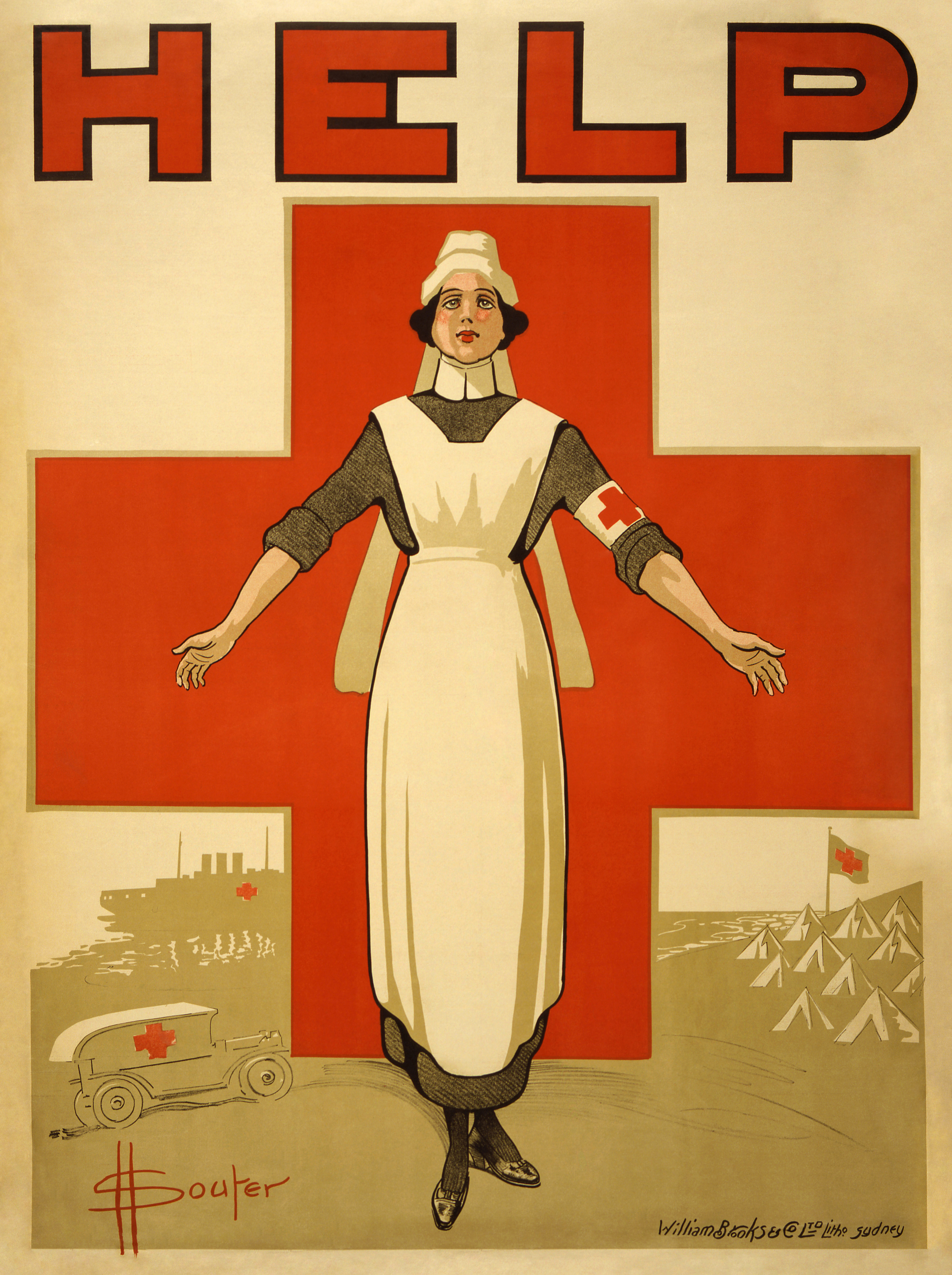
Best Thing on the Worst Day

 via Library of Congress
It was a busy night.

That is saying a lot.

All of our Monday nights are busy these days, but this was bad even by our standards. We had our fastest night shift ER doc working and extra staff, but still the patient's kept pouring in all night long.

We had sick patients too.

It was so bad that we woke up the morning shift doc and brought him in at 4 am because the department and the waiting room were full and the night shift doc was still ten charts behind.

That wasn't the only thing that made it unusual.

It was that rare night in the Emergency Department when all my patients:

1) Have a good reason to be in the ED.
2) Actually appreciated my help.

A night like that can carry you for six months -- it usually has to since it is about as common as hen's teeth these days.

With the onset of the Affordable Care Act,  Emergency Departments have seen huge increases in patient volume. Many more people have access to health insurance under Obamacare, but there has not been a huge increase in primary care providers to see them.

Yet it is not just people with new access to insurance. A 2013 studies found that only about one third of the people who come to the emergency room require immediate attention and 70 percent at that time had private health insurance.

The emergency rooms are filled around the country with non-emergent conditions and unrealistic expectations. We don't dole out narcotics like candy. We don't solve mystery conditions that you've been to every specialist to see. We give toddlers with fevers over the counter medications that parents could have given at home. We get sent patients from clinics because they can't get a same day appointment -- or don't want to wait until morning. People call ambulances because they don't have gas money and don't want to pay for a taxi.

The least sick, it seems, are the most rude and impatient. It is tempting to be rude right back, but that's what they want. They want to start a fight, to get into a tug of war. Something to tell their friends and post on social media. The only way to win that sort of power struggle is to not engage, to not pick up the rope.

Moreover, these days nurses live in fear of the dreaded "Patient Satisfaction Survey." Federal insurers want to pay hospital based on patient satisfaction -- but it is a rigged game. It assumes the patient is a customer in a restaurant, but it is the doctor that places the order. Patient advocacy is the nurse's primary motivator, but sometimes what is best for a patient is not what the patient wants or expects -- because they aren't the medical experts and they don't always want what is best for their own well being.

When our surveys dropped a few years ago, our corporation ran us through a bunch of training to teach us how to be better service workers rather than professionals.

Unfortunately the first day of these classes they explained the methodology of the survey.  Satisfaction with care was rated on 1-10, but everything below an 8 was scored as a "0." The results were not randomized, sample sizes and response errors were big problems.  We were rigged to fail. Why? I suspect is has something to do with the fact that the companies that do these surveys also profit from the consultants and seminars and education products sold to hospital systems that panic at less than perfect scores.

So we are taught how to be kind and patient with people exhibiting behavior that would get them kicked out of the lowest dive bar in town.

This night was different.

My patients were sick. I had a brain damaged man having increased seizures because of a change in his medications. I had a cancer patient on chemotherapy with a fever -- he and his wife were kind and jolly despite a terminal diagnosis. He kept making jokes as I accessed his port and drew blood cultures.

"I'm terminal," he said. "What else is there left to do with my time, but laugh as much as possible?"

Late in the night I helped with a trauma patient. An elderly lady had fallen down a flight of stairs. She was on Warfarin and had a head bleed, broken ribs and hemo-pneumo that required a chest tube. She was deteriorating. We moved her to a trauma bay to get her chest tube in and possibly intubated for the flight to Portland.

The room was filled with nurses and techs -- so often when you have a sick patient, the staff appears when you need it most.

So I lingered to cover the other rooms and found myself standing with the woman's husband in the hall. I brought him a chair, which he leaned on, but did not want to sit.

This is nursing sometimes, standing with a family member while they come to realize how this night will never leave their memory.

The doctor came out -- and behind them, I saw the Lifeflight crew shouldering their bags and walking away. Our doc had got a call back from the receiving hospital. He was told by the neurologist that the prognosis was so poor that it was not worth risking a helicopter flight.

The doctor returned to the room to put in the chest tube and I stood with the husband as he started to cry. I just stayed there, stayed present with him and we talked.

He had bad nights before. He was a World War II veteran. He had been wounded twice and saw the war end while he was in Austria. The first time he had been wounded, he pulled the shrapnel out himself and kept going. He explained that if he was medivac'd out, he would have lost contact with this unit.

"Those were the guys you were fighting for," he said. "Those were the people who had your back. You didn't want to leave them. They're your family."

While nothing like combat, his story made me think of how the whole department pulled together when there was a disaster or trauma, or critically ill patient that needed extra hands, extra help.

In the room, three nurses and two techs helped the doctor secure the chest tube which quickly drained the blood from the woman's chest and allowed her lung to re-inflate.  The radiology tech stood by with the portable chest x-ray, respiratory therapists were at bedside.

All that staff in that one room meant that somewhere a call light wasn't being answered as quickly as would otherwise have been the case. Someone was waiting for a warm blanket. Other less acute patients were still waiting to be seen. Our critical care of this one patient would probably reduce our patient satisfaction surveys.

Most nights I'm the charge nurse, directing traffic and solving problems and rarely doing hands-on care. I love my one or two nights a month where I get to take care of patients. It reminds me why I got into this business in the first place.

When I first got into medicine -- as a volunteer EMT -- someone told me that I'd have the opportunity to be the best thing on the worst day of someone's life.

Being present doesn't have a billing code. Standing with a family member at a horrible moment during a tragic night might not move the needle on a patient satisfaction survey.

Yet sometimes, that's what nursing is.

-30-

Further Reading:
The Problem with Satisfied Patients
Seven Things You May Not Know About Press Ganney Statistics
Emergency Room Visits Continue to Climb
The Ten Types of ER Patients
The Yelp-ing of Emergency Rooms

5.06.2014

The Zen of Nursing

Life is not fair.

If you haven't noticed that by now, either you haven't been paying attention or you don't have enough birthdays under your belt.

Life was never fair, and never meant to be.

While whole religions have erupted from the minds of men to address this one issue, the fact remains, there is no divine justice wrought here upon the Earth.

I learned this lesson while I was very young, but had it reinforced by a decade as a newspaper reporter.  I saw cold-blooded killers set free, saw liars triumph and the honest punished for their honesty. Mendacity rules at all levels of power. Inhumanity and incompetence are promoted. Debased actions and bullying are rewarded. Being a reporter is to strive for truth in the face of lies. Journalists comfort the afflicted and afflict the comfortable.

In journalism, fairness is a watchword and justice is what every young wide-eyed new reporter seeks. Yet, the pay is barely minimum wage and you are disposable to your employer and community. After seven years at one paper -- winning awards and working 60 hour weeks, I was told to move on because the corporation didn't want to start paying reporters more than $18,000 a year.

"You've had too many raises," the executive told me from the hollow of his tailored suit. "You've reached the pay ceiling."

Everyone hates you when you tell them the truth anyway.

I had few illusions when I went into nursing.

Sure, there are golden moments when all is right. When your patients are healed by your actions and grateful for your kindness. Those moments must carry your for six months to a year before you might encounter them again. In the interim, the kind nurses will be cursed at and shat upon, denigrated and abused. They will work long hours and then be mandatoried over to work more -- punished for showing up to work.

They will cast themselves upon the rocks of the suffering and pestilent, the addicted and debauched, to be broken, yet to stand again.

At least the pay is better.

Moreover, as emergency room nurses we see the inequality of life's whims on full display. Children suffer, criminals get out of jail by malingering. The drunk driver murders children, then staggers away without a scratch. The kind die in pain and suffering while the cruel survive again and again. Sickness is not tied to sin.  The good die and suffer for no good reason. The gift of survival falls heedless of whether the recipient deserves another breath.

It is a hard lesson for a nurse to learn. The zen of nursing is learning to heal without judging, without a care about justice. Your job is to make the sick better, not to make the world fair.

No, there is no fairness in this business nor in life.

Yet in our larger lives, we must still strive for justice -- for justice is a thing wholly created by humanity. It is our humane reaction to the unfairness of life. Justice is the perfection we seek but may never attain. Striving for justice, fairness and equality are the only tools we have to battle back against the empire of fates that seek to pound us into submission.

The world is not fair.

It never will be.

Unless by our hands we make it so.

-30-

2.17.2014

Keep it Simple - the French Way

Good article on the contrast between care for cancer in France vs the United States.

In it the author talks about cancer care her father received in the US and in his native France.
I also didn’t know what the French healthcare system would be like. I’d read it was excellent, but assumed that meant there was better access for the poor and strong primary care. Not better cancer specialists. How could a public hospital in Paris possibly improve on Sloan Kettering’s cancer treatment?
One way, the health insurance system isn't a maze to trap the ill and dying in. With less focus on paying for care, there is more time and attention that can be paid to the patient.

The French Way of Cancer Care is by Anya Schiffrin and worth reading.

 http://blogs.reuters.com/anya-schiffrin/2014/02/12/the-french-way-of-cancer-treatment/

12.16.2013

Carrying The Old Woman


I often find myself thinking of an old zen story. 

In the story, two traveling monks reached a river where they met a woman. The woman was wealthy and had porters for her litter, but the porters were afraid to cross the river carrying their mistress. The woman was bitter and cursed the servants. When she saw the two monks, she angrily demanded that they carry her to the other side. 

The young monk hesitated, uneager to help someone who appeared so spiteful, yet the old monk silently picked her up onto his shoulders, transported her across the water, and put her down on the other bank. She did not thank him. Instead she continued to spit venom at the monk, complaining and cursing as he walked away. 
.
As the monks continued on their journey, the young monk was brooding and preoccupied. 

Unable to hold his silence, he spoke out.
"That woman was cruel, and when you helped her, she offered you no gratitude. Instead she cursed you. You should not let her treat you that way."
"Brother," the second monk replied, "I set her down on the other side, while you are still carrying her."

I learned long ago that the way people treat you has little to do with your actions or your value as a human being. Our ego, constantly insists that we deserve respect. So much so, that we think this is the calculation of our worth. 

What I have found in my two careers as a journalist and as a nurse is quite different:

People will yell at you whether you do the right thing or the wrong thing.
People will resent you whether you tell them the truth or a lie.
People will treat you cruelly whether you help them or harm them.

Thus, if their treatment of you is independent of your actions, you should not let their attitude dictate how you proceed in the world. Particularly in nursing, people come into our care with a lifetime of emotional pain that we cannot expect to repair in our short encounter with them. Some live lives so fettered by darkness that they develop antibodies to kindness and light. 

People so often treat the world based on their pain and their ego, not on the human being in front of them. So we should not let their behavior dictate ours. Nor should we take personally the condition of their soul. They may have been broken long before you encountered them and they likely will be broken when you walk away. 

In the meantime, you do what is right, because it is right not because of expected praise or gain. The elder monk did not expect kindness from the rich old woman, nor did he let it bother him. 

We should help, we should be kind, we should tell the truth, we should do the right thing not in some expectation of reward, but rather, because it is the right thing. 

It is OUR actions that define us. Because we are kind, because we are truthful, we do not allow others to germinate unkindness, mendacity or cruelty within us. 

It is easy to allow mistreatment to fester in us, to claw at our awareness such that we do not see everything good around us. Resentment is a handicap to living. 

The is a cross post from my other blog TheebbTIDE, where I usually write about non-medical things.

Ed's Note: The version of this story is from Zen Shorts a book by John J. Muth. The original story referred to a religious prohibition of monks touching women. Muth's version is much more helpful and the book is wonderful. 

10.26.2012

Doctor My Eyes ...

I love collecting medical songs.
 I have a collection on Spotify you can listen to called Medically Necessary that opens with the great Jackson Browne's "Doctor My Eyes" which includes that wonderful line "is this the price, for having learned how not to cry."

These songs were the soundtrack to hard days treating dying patients in my earlier years of oncology nursing. They helped me get through hard nights and gave me strength to go back for another 12 hours shift. Music is the best medicine - at least for me. Especially on a long and winding drive home. I'm always finding new songs and adding to my playlist.

One song I can't find on Spotify that belongs on that playlist is "Only the Song Survives" by John Hiatt. The song is a brilliant ballad about a couple that find themselves in the Emergency Room after a car accident. In it, the singer has short term memory loss, and he has trouble remembering what happened, and even that he was married in the first place. I can't put it on my playlist, so here it is:

If You Want to Make God Laugh...

 Early on in the pandemic one of my daughters exclaimed "Covid ruins everything!"  It became a running joke in our house, a bitter...